What does a local SEO agency actually do?
A local SEO agency helps your business show up when nearby customers search on Google. That mainly means three things: your Google Business Profile, your website, and your reviews. A good agency fixes your profile details, builds pages that match what customers search for, and helps you collect and answer reviews. A bad agency talks mostly about rankings and says very little about customers, calls, or bookings.
Before you hire anyone, get clear on what you want. Most local business owners want one thing: more calls and enquiries from people nearby. Rankings alone do not pay the bills. Keep that goal in front of you during every sales call, and judge every agency promise against it.
For background on how search works, see the search engine optimization overview on Wikipedia. Local SEO applies those same ideas to one town, city, or service area.
What should I look for first?
Start with proof of real local work, not with a slick sales deck. Look for these signs:
- Real local examples. Ask to see Google Business Profiles and local pages the agency has actually worked on, with the business names visible.
- Plain explanations. A good agency explains its plan in words you understand, without hiding behind jargon.
- Focus on your profile first. For most local businesses, the Google Business Profile drives the first calls, so it should come early in the plan, not last.
- Honest timelines. Local SEO is steady work. Anyone who promises instant top rankings is selling something that does not exist.
- Clear reporting. You should see profile views, calls, direction requests, and website enquiries, not just a ranking chart.
- Work you can check. You should be able to open your profile and your pages and see the changes yourself.
If an agency cannot show you real work or explain its plan simply, that is already your answer.
What are the red flags when choosing an SEO agency?
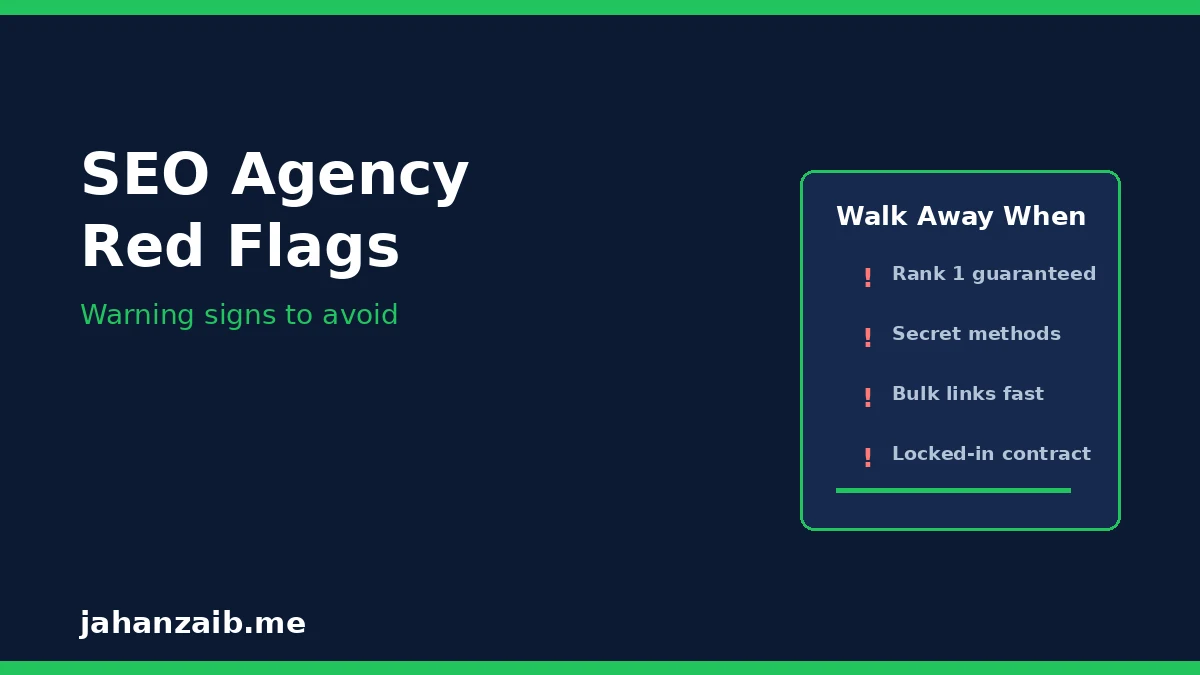
Some warning signs should end the conversation immediately:
- Guaranteed number one rankings. Nobody can guarantee a top spot on Google. This promise alone is a reason to walk away.
- Secret methods. If an agency will not tell you what it will actually do, assume the work would embarrass them if you saw it.
- Thousands of links fast. Bulk, low quality links can harm your rankings and are hard to undo.
- No access to your own accounts. Your profile, website, and analytics belong to you. Never accept an arrangement where you cannot see your own data.
- Long lock-in contracts. A fair agreement lets good work earn the renewal. A 12 month lock-in before any work is done protects the agency, not you.
- One package for every business. A restaurant, a plumber, and a dental clinic do not need the same plan. A fixed package for all three is a sales product, not a service.
- Reports full of vanity numbers. Impressions and ranking charts look impressive while calls stay flat. Ask what the report says about real enquiries.
Trust your gut here. Pressure tactics, countdown offers, and claims that your listing will be deleted unless you sign today are sales tricks, not SEO advice.
How much should local SEO cost?
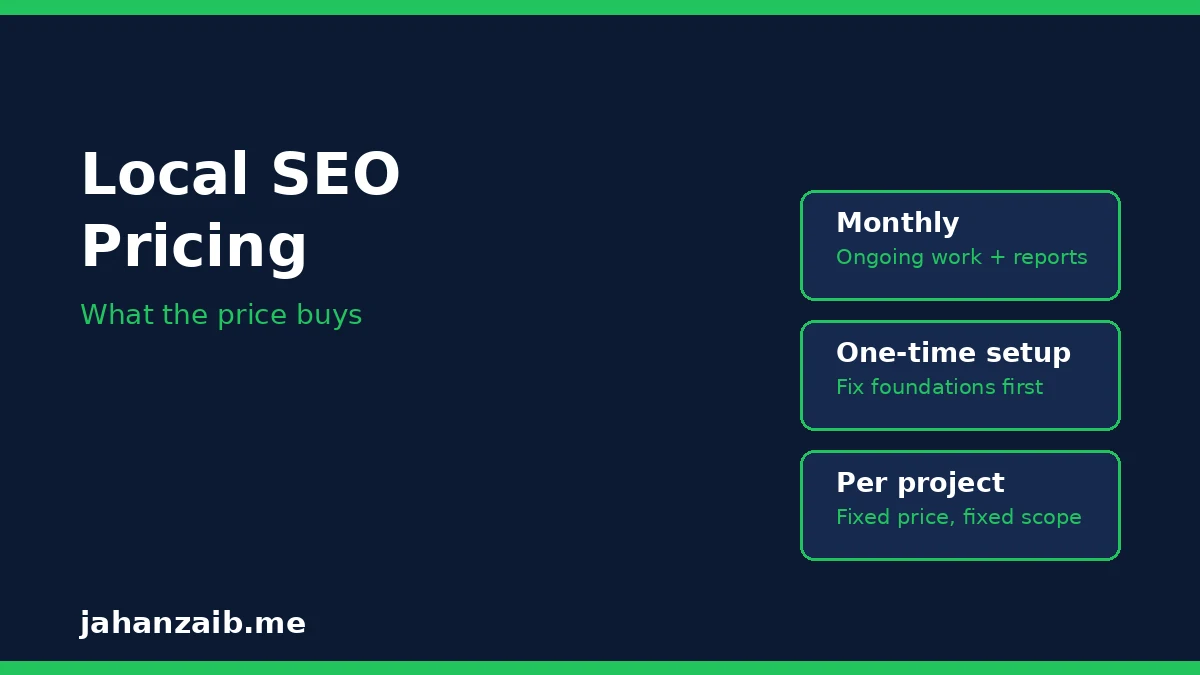
Local SEO pricing varies a lot, and there is no single correct price. What matters is what the price buys. Common models include:
- Monthly retainer. You pay each month for ongoing work: profile management, content, reviews, and reporting.
- One-time setup. A single project to fix your profile, core pages, and basic technical issues, with no ongoing commitment.
- Project based. A fixed price for a defined piece of work, such as a full local audit or a set of service pages.
Judge price against the work, not against other agencies. A very cheap monthly fee usually means very little work is actually done, or the work is automated and identical for every client. A higher fee is only worth it if the agency can show you exactly what hours and tasks it covers. Ask for the task list in writing before you agree to any price.
Also ask what happens if you stop. You should keep your profile, your website content, and your data. If leaving means losing everything that was built, the price was never the real cost.
What questions should I ask before hiring?
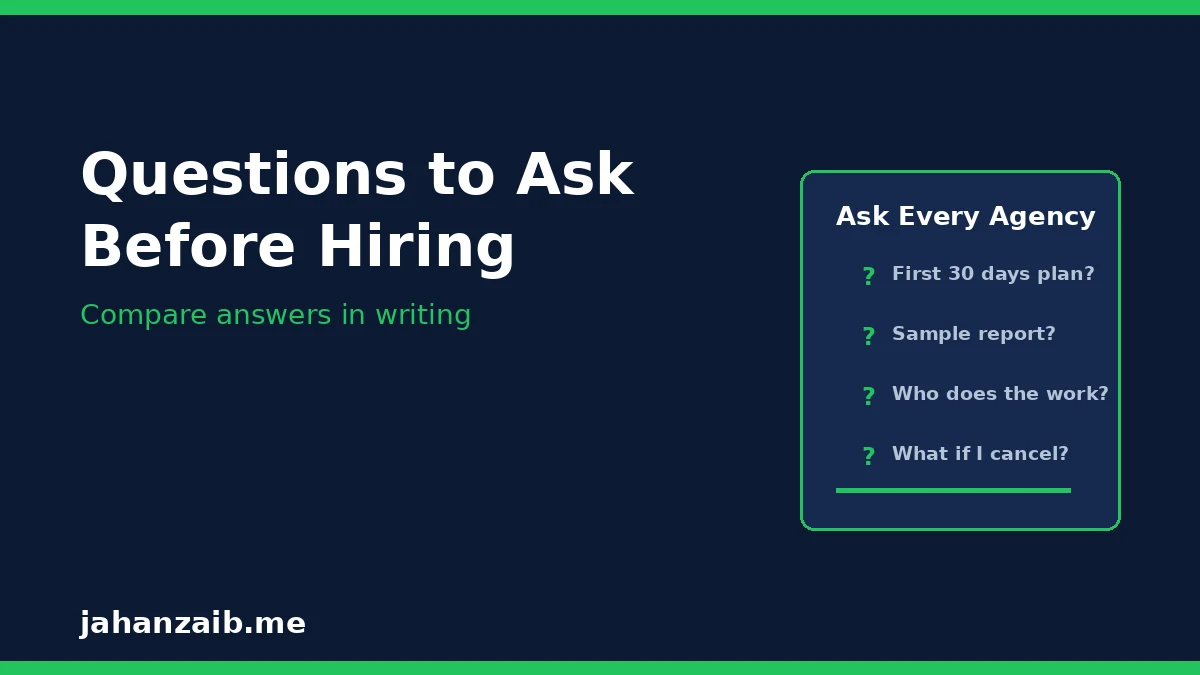
Use these questions on every sales call. The quality of the answers tells you most of what you need to know:
- What will you do in the first 30 days? Look for specific tasks, not vague promises about visibility.
- Who will actually do the work? Find out whether the person selling to you is also the person doing the work.
- Can I see a sample report? A real report shows calls, profile actions, and enquiries, not only rankings.
- How will you handle my reviews? Good agencies help you ask for reviews and answer them. They never buy reviews or write fake ones.
- What do you need from me? Honest agencies need your input: photos of real work, service details, and answers about your area.
- What happens if I cancel? You should keep your accounts, your content, and your data, with no penalty traps.
- How do you measure success? The right answer mentions calls, bookings, and enquiries, not only rankings.
Write down the answers and compare agencies side by side. The agency with the clearest, most specific answers usually does the clearest, most specific work.
Should I hire an agency, a freelancer, or do it myself?
Each option fits a different situation:
- Do it yourself. Best if you have time, a small service area, and a willingness to learn. Start with your profile and one page per service. My Google Business Profile optimization guide walks through the profile work step by step.
- Hire a freelancer. Often a good middle ground: one experienced person, direct communication, and lower overhead than an agency. Check their real local work the same way you would check an agency.
- Hire an agency. Best when you need several skills at once, such as technical fixes, content, and ongoing management, and you have the budget for a team. Make sure you know who your day to day contact is.
There is no shame in starting small. Many owners handle the profile themselves, then hire help for the website or for content once the business grows. The wrong choice is paying for a big package before you understand what you actually need.
How long before I see results?
Local SEO takes time, and any honest answer says so. Your profile fixes can show movement fairly quickly, because correct details, photos, and reviews change how customers see you right away. Website rankings move more slowly, because Google needs time to find, understand, and trust new or improved pages.
Be suspicious of exact promises such as a top ranking by a fixed date. Realistic progress looks like this:
- First weeks: profile corrected, photos and services added, review requests started.
- First months: steady reviews, better profile actions, and clearer website pages.
- Over time: a growing stream of calls and enquiries from nearby searches, not a single overnight jump.
If an agency cannot explain what should improve first and what takes longer, it probably does not have a real plan.
What should a good monthly report show?
A useful report answers one question: did this work bring us more real customers? It should include:
- Profile actions. Calls, direction requests, and website clicks from your Google Business Profile.
- Enquiries. Form submissions, quote requests, and bookings from your website.
- Reviews. New reviews gained, review replies posted, and your current rating trend.
- Work completed. The actual tasks done that month, with links you can check yourself.
- Next steps. What the agency will do next month, and why.
Rankings can appear in a report, but they should never be the whole report. A page one ranking that brings no calls is a decoration, not a result.
What does a good first 30 days look like?
The first month should be mostly fixing foundations, not chasing advanced tactics:
- Week 1: audit and access. The agency checks your profile, website, reviews, and listings, and confirms you own your accounts.
- Week 2: profile fixes. Correct category, services, hours, phone number, service area, and real photos.
- Week 3: website basics. Fix page titles, add one page per main service, and make calling easy on mobile.
- Week 4: reviews and reporting. Start the review habit, answer existing reviews, and set up a simple baseline report.
If the first month produces only a long report and no visible fixes, ask what exactly was done. Good work leaves traces you can see.
How do I know it is working, and when should I leave?
Judge the work on customer actions, not on agency enthusiasm. Signs it is working include more profile calls, more quote requests, more reviews from real customers, and a profile and website you are proud to show people. Signs it is not working include months of reports with no change in calls, work you cannot verify, and excuses every time you ask a direct question.
Leave when:
- You cannot see the work. Months pass and nothing on your profile or website has visibly changed.
- Calls stay flat with no explanation. A good agency investigates flat results and changes the plan.
- Trust is broken. Fake reviews, hidden links, or lost account access are immediate reasons to end the relationship.
- Communication stops. If you have to chase every update, the agency has already stopped serving you.
Ending a bad arrangement early usually saves more money than staying loyal to it. Your profile and your reputation recover faster than your budget does.
So, how do I make the final choice?
Shortlist two or three agencies or freelancers, ask them the same questions, and compare their answers in writing. Pick the one that shows real local work, explains its plan plainly, reports on calls and enquiries rather than only rankings, and gives you full access to your own accounts. Price matters, but clarity matters more: the cheapest vague promise usually costs the most in the end.
If you want a second opinion on an agency proposal, or help getting your own local visibility fixed properly, from your profile and reviews to your service pages, contact me and tell me what your business offers and where you work. I will look at your current visibility and tell you honestly what would help most first.