If you have ever wondered why a competitor outranks you on Google even though your website looks better, the answer is often links. Links from other websites act as votes of trust, and Google still treats them as one of the strongest ranking signals in 2026. The good news: a small business does not need a five-figure SEO budget to build links. In my work as a local SEO and digital marketing specialist, I have seen small businesses outrank bigger competitors using nothing more than local relationships, simple outreach, and useful content. This guide shows you exactly how to do it, step by step, with zero jargon and no risky shortcuts.
What Is Link Building and Why Does It Matter?
Link building means getting other websites to link to your website. Each link tells Google that your site is trusted and worth recommending. Here is what quality links give a small business:
- Higher rankings on Google for your most valuable search terms
- More visibility on Google Maps and in the local results, where links feed the “prominence” factor
- Referral traffic from real visitors clicking through to your site
- Stronger trust in the eyes of AI search tools like ChatGPT, which use links and brand mentions to verify authority
One link from a relevant, trusted website is worth far more than dozens of links from random blogs nobody reads.
Do Small Businesses Still Need Links in 2026?
Yes, and more than ever. Google’s 2026 updates penalized artificial link schemes harder than before, which made real, earned links even more valuable. For local businesses, links remain one of the top factors Google uses to decide who appears in the Map Pack. If you are already working on Map Pack visibility, my guide to ranking in the Google Map Pack in 2026 shows how links fit into the bigger local picture.
The important shift: Google now rewards clusters of niche-relevant links over raw numbers. Ten links from local and industry websites in your area help a Manchester plumber far more than one link from a famous but unrelated website.
What Types of Links Matter Most for Small Businesses?
Not all links are equal. Focus your time on these four types:
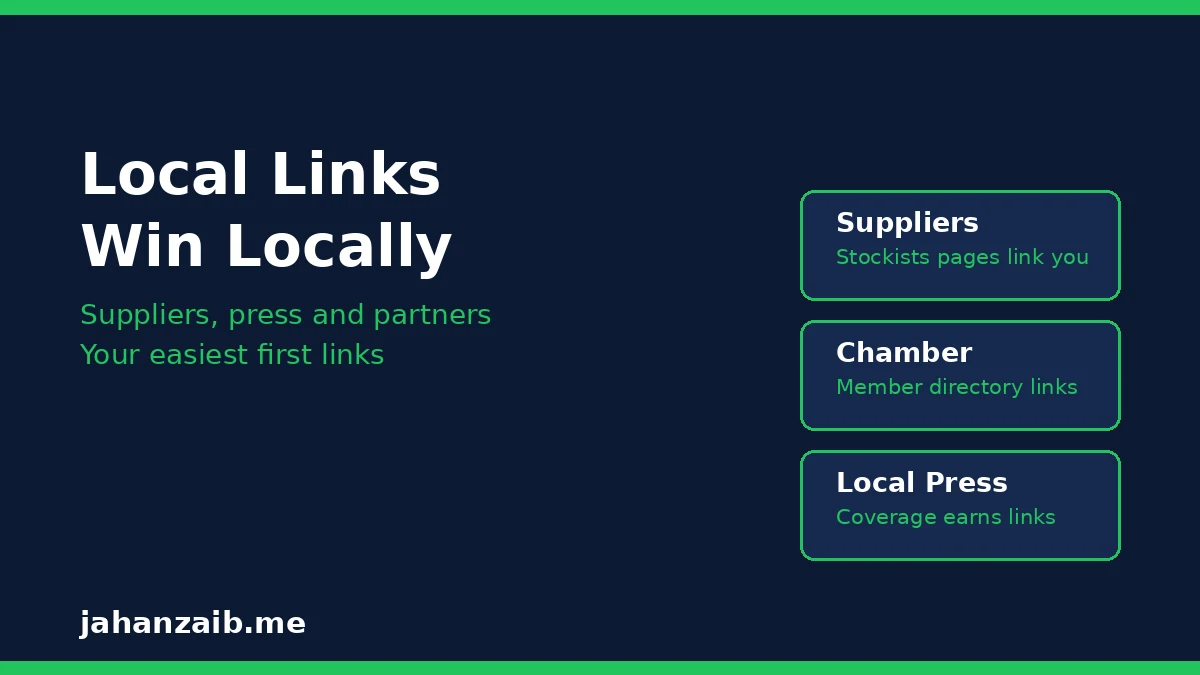
- Local links: from businesses, organizations, and news sites in your city or region. These are the easiest to earn and the most powerful for local rankings.
- Industry links: from suppliers, trade associations, and niche directories connected to your trade.
- Editorial mentions: when a blogger, journalist, or review site mentions your business because your content or service deserves it.
- Unlinked brand mentions turned into links: websites that already mention your business name without linking. Asking them to add the link converts very well.
How Do You Get Local Links as a Small Business?
Start with the relationships you already have. Every one of these can turn into a link, and none of them cost money:
- Ask suppliers and wholesalers to list you on their “where to buy” or “our stockists” pages.
- Ask business partners, accountants, and solicitors for a link on their client or partner pages.
- Join your local chamber of commerce and industry associations. Their member directories link to your site.
- Sponsor a local team, event, or charity. Sponsors almost always get a link on the event website.
- Host a free workshop or community event. Local news sites and community blogs love covering these, and coverage comes with links.
- Offer a local discount or competition that local blogs and Facebook groups will share.
- Create one genuinely useful local resource, like “The 2026 Home Buyer Checklist for Manchester,” and tell local bloggers about it.
Work through this list one item per week. By month three you will have more links than most local competitors ever build.
What Is the Best Outreach Email for Link Building?
Most link outreach fails because the email is generic. Keep yours short, specific, and about them, not you. Here is a template that works:
- Subject: mention their site or page by name.
- Line one: show you actually read their page. Quote something specific.
- Line two: explain what you are offering in one sentence, framed as help for their readers.
- Line three: one clear request. For example, “Would you consider adding it to your resources page?”
- Sign off with your name, business, and phone number.
Tips that raise reply rates:
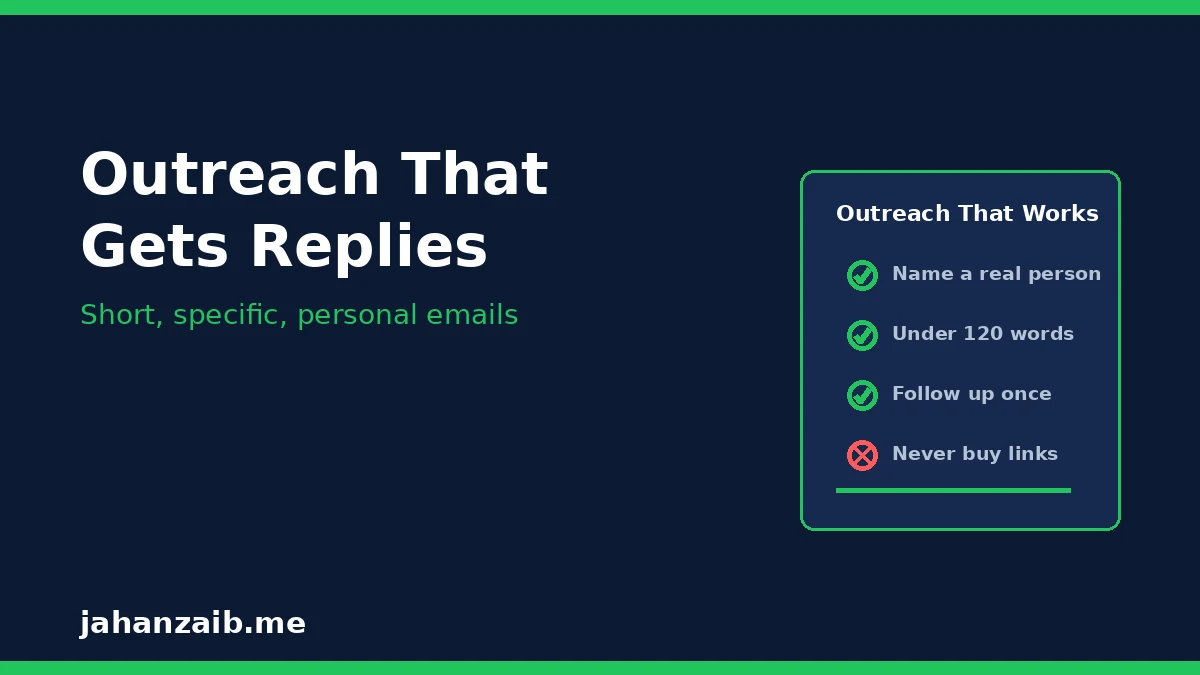
- Email a named person, never “Dear webmaster.”
- Keep the whole email under 120 words.
- Follow up once, politely, after seven days. Half the replies come from follow-ups.
- Never offer money for links in the first email. Paid links break Google’s rules and can get your site penalized.
What Is Digital PR for a Small Business?
Digital PR sounds expensive, but the small-business version is simple: give local journalists and bloggers something worth writing about. You do not need a survey of 2,000 people. Try these instead:
- Share one interesting fact from your own business experience, like price trends you see with customers every month.
- Comment as an expert on local news in your trade. Journalists need quotes from real business owners.
- Announce something genuinely new: a new location, a new service, a community project.
- Publish one data-led post per quarter on your blog, such as “Average Cost of Bathroom Renovation in Birmingham: 2026 Survey,” and pitch it to local publications.
When they cite your data or quote, you earn editorial links that competitors cannot copy.
Which Link Building Tactics Should You Avoid?
In 2026, risky link tactics are not just ineffective, they can get your site penalized or de-indexed. Avoid these completely:
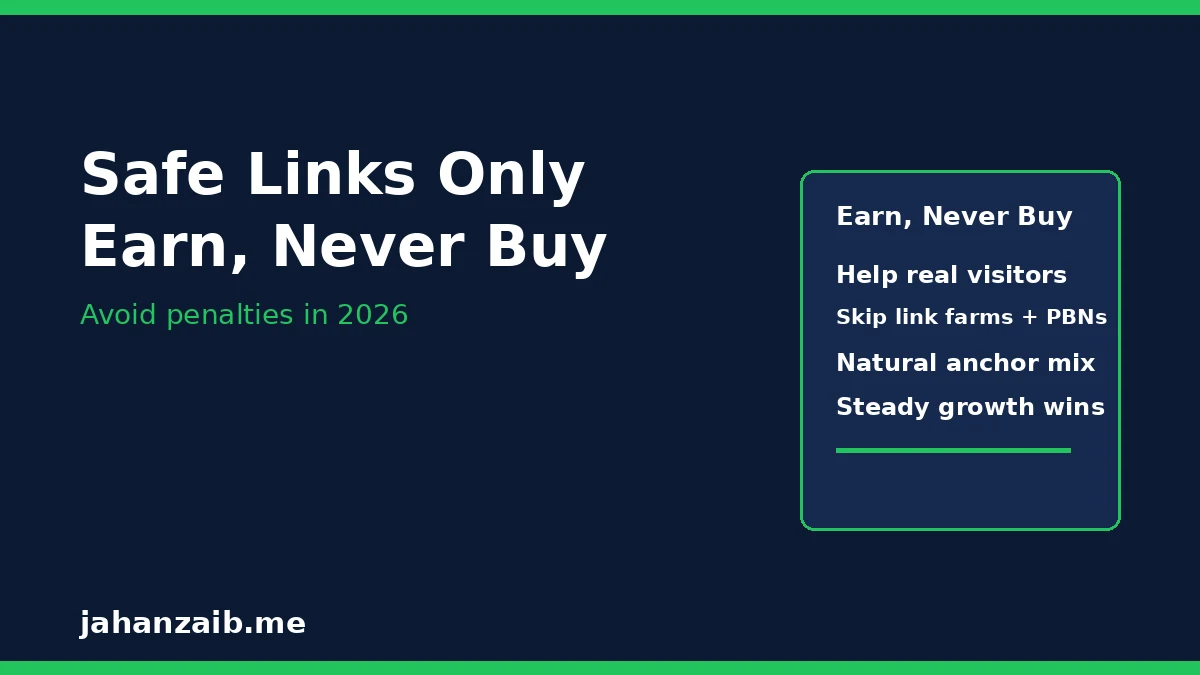
- Buying links from link farms or marketplaces. Paid link schemes are easy for Google to detect now.
- Private blog networks (PBNs). Networks of fake blogs built only to sell links. Google’s spam updates target these directly.
- Bulk directory submissions. A few real, relevant directories are fine. Submitting to 500 random directories is spam.
- Exact-match anchor spam. Getting fifty links all saying “best plumber Manchester” looks unnatural. Natural profiles use brand names and plain URLs.
- Reciprocal link schemes. Trading links in bulk with unrelated sites is a pattern Google recognizes.
The rule is simple: if a tactic exists only for Google and helps no real visitor, skip it.
How Long Does Link Building Take to Show Results?
Expect the first movement in 6 to 12 weeks after links start appearing. Links from real sites are discovered gradually, and Google applies their value over time. Competitive industries in big cities take longer, and link building is never finished: the businesses that keep earning links quarter after quarter are the ones that hold their rankings.
Track progress simply:
- Watch your target keywords climb in rank tracking or Google Search Console.
- Watch referral traffic grow from the sites linking to you.
- Watch your Google Business Profile views and calls rise as local prominence builds.
How Do You Judge Whether a Link Opportunity Is Worth Your Time?
Not every website that offers you a link deserves one. Before you spend time on outreach, run each prospect through this quick quality check. One strong link from a real site beats five from dead ones.
- Check the site is real and active. Look for recent posts, real contact details, and signs of genuine visitors. A site that has not published anything in two years passes almost no value.
- Check the topical fit. A link from a site in your city or trade carries far more weight than one from an unrelated topic. Google reads relevance, not just the link.
- Check where your link would sit. A link inside a real article or a proper resources page counts. A link buried on a page with hundreds of outbound links counts for almost nothing.
- Check the anchor text they suggest. Natural links use your brand name or a plain URL. If a site wants to link with keyword-stuffed anchor text, walk away.
- Check it brings real visitors too. The best links send you actual customers. Ask yourself: would a visitor to that site ever click through to mine? If yes, pursue it even if the SEO value is modest.
Updated 30 October 2026
Should You Hire an SEO Expert for Link Building?
If you follow this guide consistently, you can build your first 20 to 30 quality links yourself. But outreach takes time, and most business owners have none to spare. That is exactly what I do. I am a local SEO and digital marketing specialist with six years of SEMrush experience, helping small businesses in the UK, US, Australia, and other Tier-1 markets earn the links that move rankings. Tell me about your business on my contact page and I will give you an honest assessment of your current link profile and what it will take to fix it.
For the technical definition of how backlinks work, see backlinks on Wikipedia.