Why does local SEO matter more for restaurants than most businesses?
People search for food in the moment. “Best biryani near me”, “pizza open now”, “family restaurant Multan”. These searches happen on phones, often by people already out and hungry. For most restaurants, Google is the menu board, the sign outside, and the recommendation from a friend, all in one place.
Unlike a plumber or a dentist, a restaurant lives on daily foot traffic and daily orders. A diner does not research for weeks. They search, glance at the Map Pack, check a few photos and reviews, and pick a place in minutes. If your restaurant is not visible in that moment, the table goes to the place that is. That is why local SEO pays for restaurants faster than for almost any other business.
Local SEO is simply the work of making sure your restaurant shows up when nearby diners search, and looks like the obvious choice when they compare. The parts below walk through exactly how to do that.
What is the first thing to fix on my restaurant’s Google Business Profile?
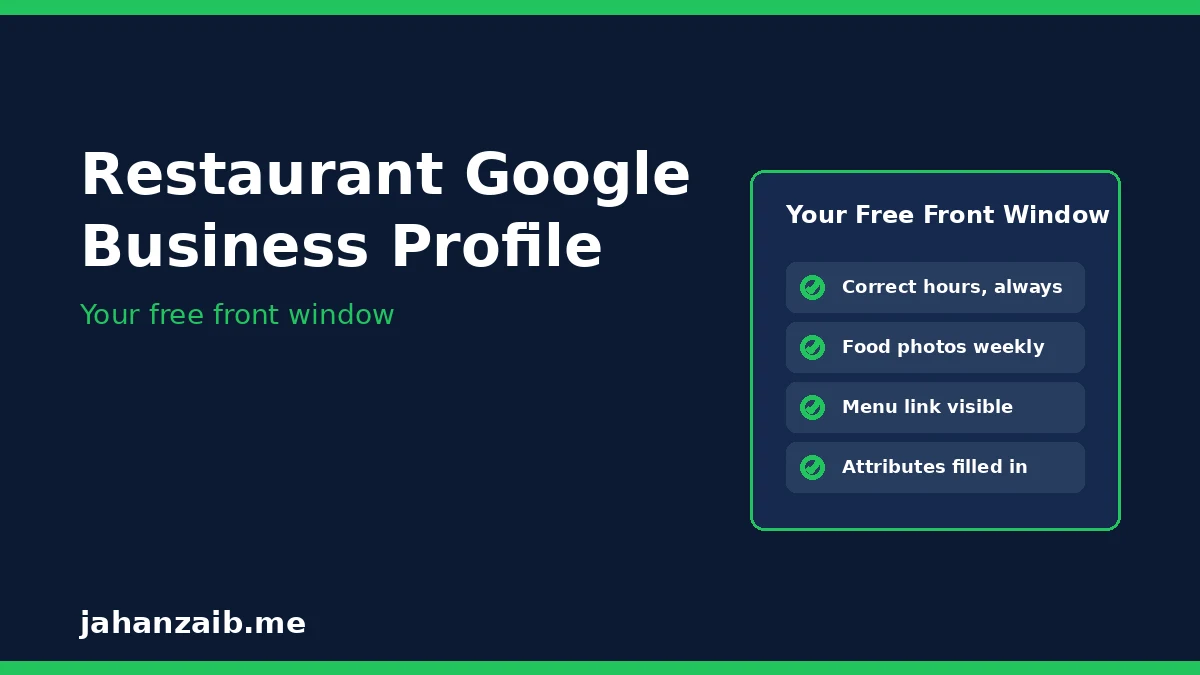
Your Google Business Profile is your free front window on Google. When someone searches your restaurant name, or finds you in the Map Pack, this profile is what they see first. Most restaurant profiles I come across are half finished. Fix these first:
- Name, address, and phone. Use your real trading name and a phone number someone actually answers.
- Hours, including special hours. Wrong hours are the fastest way to lose a diner. Update holidays and Ramadan timings the moment they are decided.
- Primary category. Choose the closest real category, such as “Restaurant”, “Fast food restaurant”, or “Family restaurant”. Do not stuff keywords into your business name.
- Menu link. Link straight to your menu page, not just your homepage. Diners click this button a lot.
- Attributes. Mark takeaway, delivery, outdoor seating, wheelchair access, and anything else that is true. Diners filter on these.
- Services and products. List your main dishes and services so Google understands what you serve.
Get the profile right before spending a rupee on anything else. My Google Business Profile optimization guide covers each setting in detail if you want the full walkthrough.
How do restaurants get into the Google Map Pack?
The Map Pack is the box with the map and three businesses that appears above normal results. For restaurant searches, it gets most of the clicks. Google decides who appears based on three things: relevance, distance, and prominence.
For a background on how ranking works in general, the search engine optimization overview on Wikipedia is a good starting point. Applied to restaurants, the three factors look like this:
- Relevance. Does your profile clearly say what you serve? Your categories, services, menu link, and website pages tell Google you are a match for the search.
- Distance. How close are you to the searcher? You cannot move your building, but a correct pin location and a clear service area help.
- Prominence. How well known is your restaurant online? This is where reviews, photos, and mentions across the web add up.
Restaurants have a natural advantage on prominence, because happy diners leave reviews and photos without being asked. The job is to give them every reason to do it and make it easy, and the review questions further down this page explain exactly how.
How many reviews does my restaurant need?
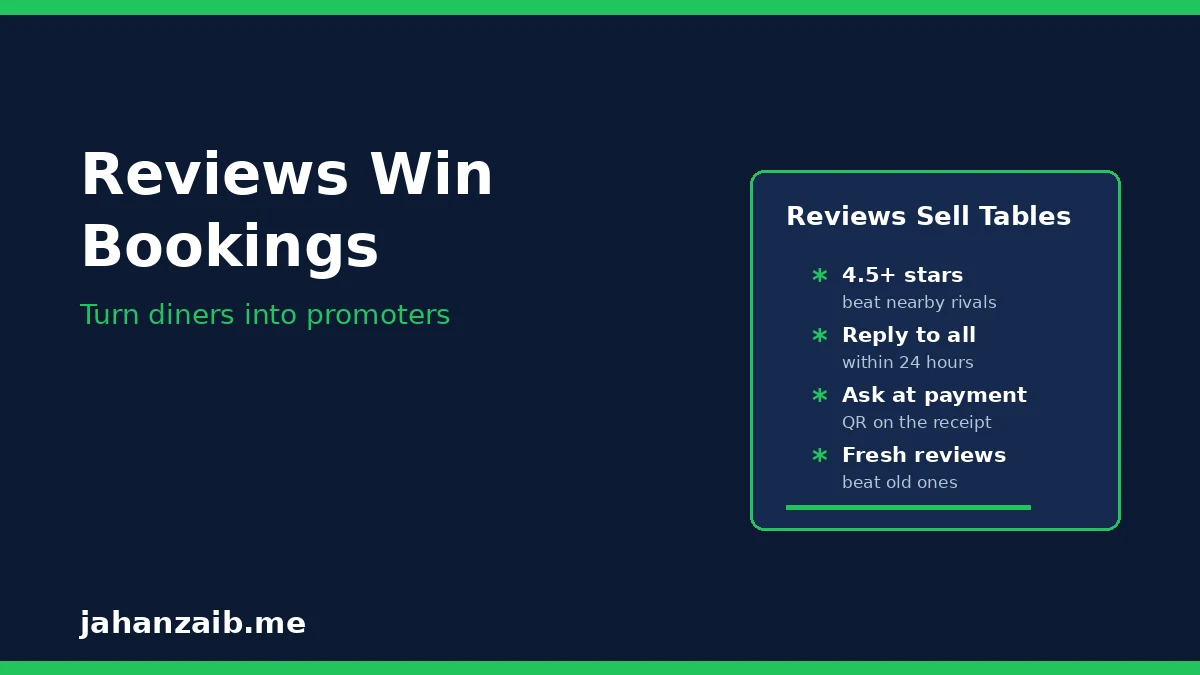
There is no magic number, but in practice a restaurant with 4.5 stars and 200 reviews beats a restaurant with 4.9 stars and 12 reviews. Diners trust volume. A small number of reviews looks like a gamble, no matter how good the stars are.
What matters more than the total is the pattern:
- Steady flow. A few new reviews every week beats 100 reviews that all arrived two years ago.
- Recent reviews. Diners check dates. A restaurant with fresh reviews looks alive and open.
- Real detail. Reviews that mention dishes and service help other diners choose, and they tell Google your profile is genuinely about food.
Ask for reviews at the right moment, when the bill is paid and the diner is happy. A small QR code on the receipt or the table tent costs almost nothing and works better than any email campaign. Never buy reviews or offer discounts in exchange for five stars. Google removes fake reviews, and diners spot them quickly.
How should I answer reviews?
Answer every review, the good and the bad. A reply shows the next reader that someone is paying attention, and it costs you two minutes.
- Good reviews: thank them by name, mention the dish they praised, and invite them back. Keep it short and warm.
- Bad reviews: stay calm and professional. Apologize for the experience, not necessarily for the complaint, and invite them to contact you directly to fix it.
- Speed matters: reply within a day or two. Slow replies look like slow service.
Never argue in a review reply. The reply is not for the angry diner, it is for the hundred people reading it afterward. One calm, professional response can turn a bad review into a reason to visit.
What should my restaurant website have to rank locally?
Many restaurants run on a single Facebook page and no website. That works until the day a diner searches on Google and finds nothing to click. You do not need a big website. You need a small one that says the right things:
- Homepage with your name, area, cuisine, phone number, and hours in plain text.
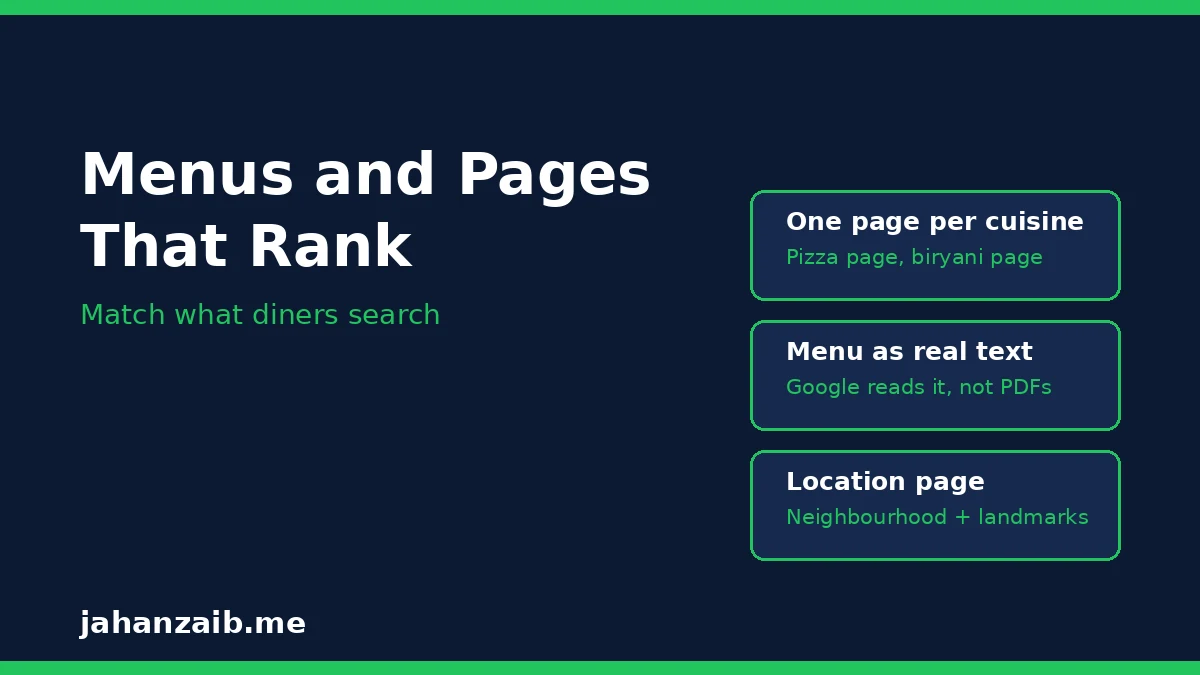
- Menu page with the menu as real text, not just a photo of a printed menu.
- Location page with your address, a map, parking information, and nearby landmarks.
- One page per main cuisine or specialty if you serve distinct things, such as a pizza page and a BBQ page.
- Photos of real food taken in your kitchen, not stock photos from the internet.
Keep the site fast and mobile friendly. Most diners find you on a phone, and a slow site loses them before they ever see the menu.
Do I really need my menu as text on the website?
Yes. A menu photo is invisible to Google. Search engines cannot read text inside an image, so a photo-only menu means Google has no idea what you serve. Diners searching for “chicken karahi” will never find a page that only has a picture of those words.
Keep the photo menu if you like the look, but add the same menu as real text below it. This one change alone can bring in searches for specific dishes. Also keep the text menu updated when prices change. Nothing frustrates a diner more than finding one price online and another on the printed menu.
How do photos help my restaurant’s rankings?
Food is visual, and Google knows it. Restaurant profiles with plenty of good photos get more clicks, more direction requests, and more calls. Add photos regularly, not once at opening:
- Dishes. Your best sellers, shot in natural light. These are the photos that sell.
- Interior. Diners want to know the seating is clean and comfortable before they bring family.
- Exterior and signboard. Helps people find you in person and confirms the profile is real.
- Team. A photo of real staff builds trust that stock images never will.
Upload a few new photos every month. Fresh photos signal an active business, and they give diners a reason to look at your profile again.
What mistakes do restaurants make with local SEO?
After working on local SEO for years, the same restaurant mistakes keep appearing:
- Menu only on Facebook. Facebook pages rarely rank on Google. Your menu needs to live on your own website too.
- Wrong or outdated hours. One diner arriving at a closed restaurant tells the story to everyone they know.
- Ignoring reviews. Unanswered one star reviews sit at the top of your profile like a warning sign.
- Stock food photos. Diners recognize stock photos and wonder what the real food looks like.
- No phone number answered. If the profile says “call” and nobody picks up, the diner calls the next restaurant.
- Keyword stuffed business name. Adding “best pizza in town” to your business name violates Google’s rules and can get your profile suspended.
How do I track whether local SEO is working?
You do not need expensive software. Watch the numbers Google gives you for free:
- Profile views and actions. Calls, direction requests, and website clicks in your Google Business Profile insights.
- Review trend. Are new reviews coming in weekly, and is the average rating holding or rising?
- Phone calls. Ask callers how they found you, or use a separate tracking number on the profile.
- Bookings and walk-ins. The only number that finally matters. Compare month to month.
Give the work three months before judging it. Profile fixes and reviews build gradually, but once the momentum starts, it keeps bringing tables without extra spending.
Want more tables from Google?
Local SEO for restaurants is not complicated, but it is detail work, and it never really ends. Profiles need updates, reviews need answers, and menus need to stay current. If you would rather run your kitchen while someone else runs your Google presence, get in touch and I will look at your restaurant’s visibility and tell you exactly what to fix first.