Search for almost any local service and a map with three business listings appears at the top of Google, above every website. That box is the Google Map Pack, and it collects the phone calls, direction requests, and website visits that local businesses live on. If your business is not in it, you are competing for the leftovers. In my work as a local SEO specialist, Map Pack ranking is the single highest-value local SEO goal a small business can set, because it puts you in front of people who are ready to buy right now. This guide explains exactly how Google ranks the Map Pack, the factors that matter most in 2026, and a 30-day plan you can follow starting today.
What Is the Google Map Pack?
The Google Map Pack (also called the local pack or the 3-pack) is the block of three business listings Google shows with a map at the top of search results for queries with local intent. Each listing shows the business name, star rating, address, hours, and a link to call or get directions. It appears for searches like “plumber near me” or “best dentist in Manchester,” and often for searches without “near me” at all, because Google infers location from the device or the query itself.
Why Does Map Pack Ranking Matter for Your Business?
People who see the Map Pack are not researching. They are choosing. That makes these clicks worth more than almost any other traffic a local business can get. Here is what a top-three Map Pack position gives you:
- Visibility above all organic results on mobile and desktop
- One-tap calling and directions, which shortens the path from search to sale
- Star ratings shown before anyone visits your website, building trust early
- Free placement that keeps working every time someone searches in your area
How Does Google Rank the Map Pack?
Google is unusually open about this. It states that local results are ordered by three factors: relevance, distance, and prominence.
- Relevance: how well your business matches what someone searched for. This comes from your categories, services, business description, and the content on your website.
- Distance: how far your business is from the searcher or the location in their query. You cannot change this one. It is the tiebreaker you work around by being clearly stronger on the other two.
- Prominence: how well known and well regarded Google believes your business is. Reviews, links, citations, and how people interact with your profile all feed prominence.
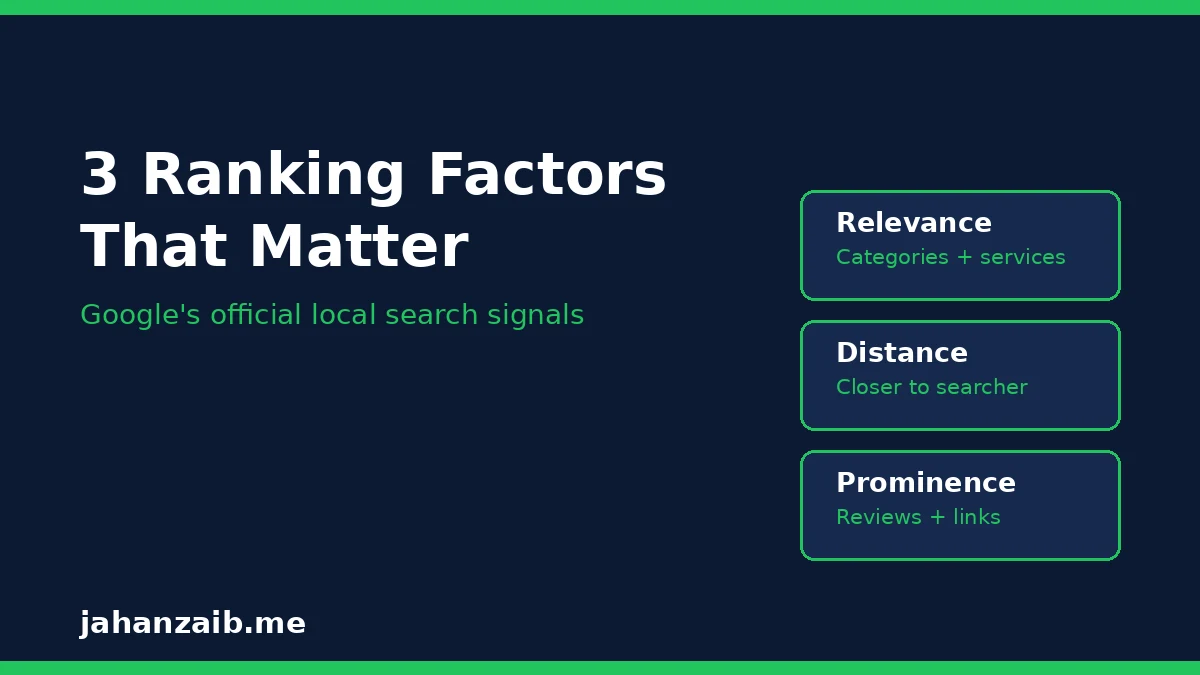
Everything you do to win Map Pack rankings is a way of strengthening relevance or prominence.
What Is the Most Important Map Pack Ranking Factor?
Your Google Business Profile category is the single highest-leverage choice you make. Google Business Profile signals carry the largest share of Map Pack ranking weight, and the primary category is the first of those. Choose the most specific category that describes your main service, for example “Emergency Plumber” instead of just “Plumber.” Then add every secondary category that genuinely fits. After that, the factors that move the needle most are proximity to the searcher, review count and rating, and whether your business name, address, and phone number match everywhere online. If you have not yet optimized your profile, start with my complete guide to Google Business Profile optimization, then come back to this plan.
How Can You Win Map Pack Rankings in 30 Days?
Here is a week-by-week plan. None of it costs money, and most of it takes less than an hour a day.
Week 1: Fix your foundation
- Claim and verify your Google Business Profile if you have not already.
- Set the most specific primary category plus all relevant secondary categories.
- Write your services out in full, using the exact words customers search for.
- Check that your business name, address, and phone number are identical on your profile, your website, and every directory listing.
- Place the map pin exactly on your door, not across the street.
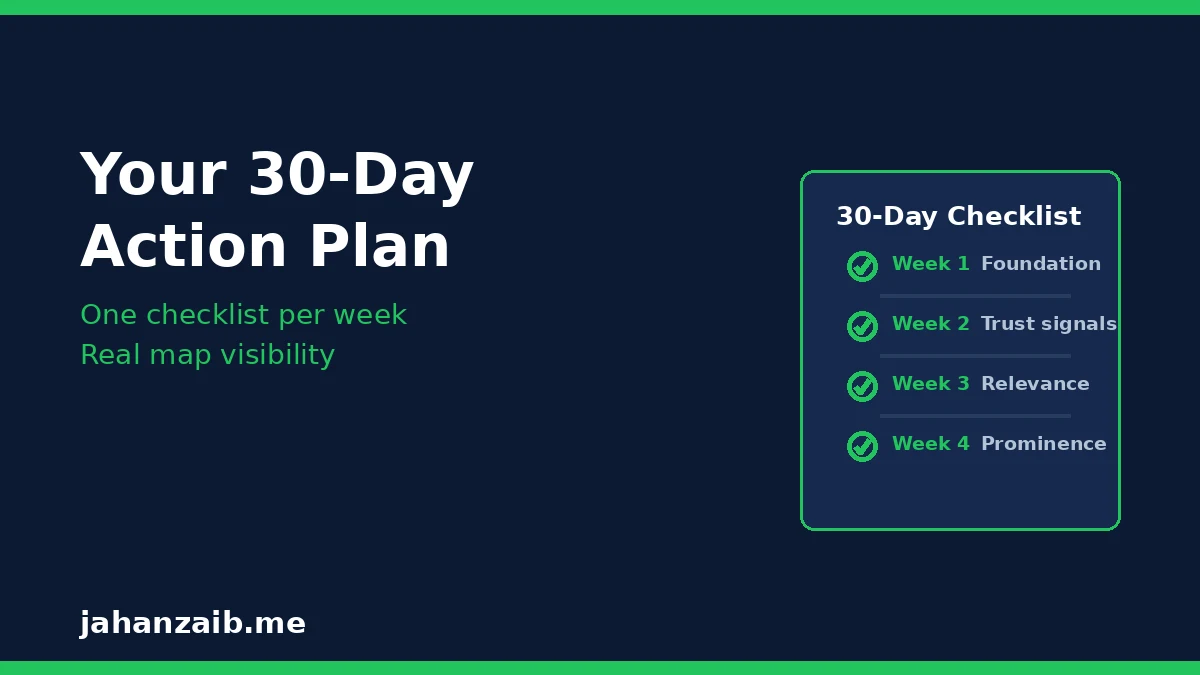
Week 2: Build trust signals
- Ask every happy customer for a Google review, and keep asking every week. A steady flow of new reviews beats one big burst.
- Reply to every review, positive or negative, within 48 hours.
- Upload real photos every week: your storefront, your team, your work. Real photos beat stock images every time.
- Answer the public Questions and Answers on your profile, and seed your own FAQs there.
Week 3: Strengthen relevance
- Publish one update post per week on your profile about a service, offer, or FAQ.
- Add a location page on your website for each city or suburb you serve, with genuine local content on each one.
- Put your exact business name, address, and phone number in the footer of every page of your website.
Week 4: Grow prominence
- Get listed in the main local directories and your industry directories with matching details.
- Ask suppliers, partners, and local organizations to mention your business on their websites.
- Track your rankings weekly from different points in your city, because the Map Pack changes block by block.
How Do Reviews Affect Map Pack Rankings?
Google states plainly that review count and review score factor into local search ranking. Reviews feed prominence, the factor you control most. The pattern I see with local businesses is simple:
- More reviews help, but only when they keep coming. A profile with 20 reviews from three years ago loses to one with 60 reviews arriving every month.
- Star rating matters. Aim to stay at 4.5 or above.
- Your replies matter too. Owners who respond to reviews signal an active, trustworthy business.
- Reviews with real text beat empty star ratings, because they add relevant keywords naturally.
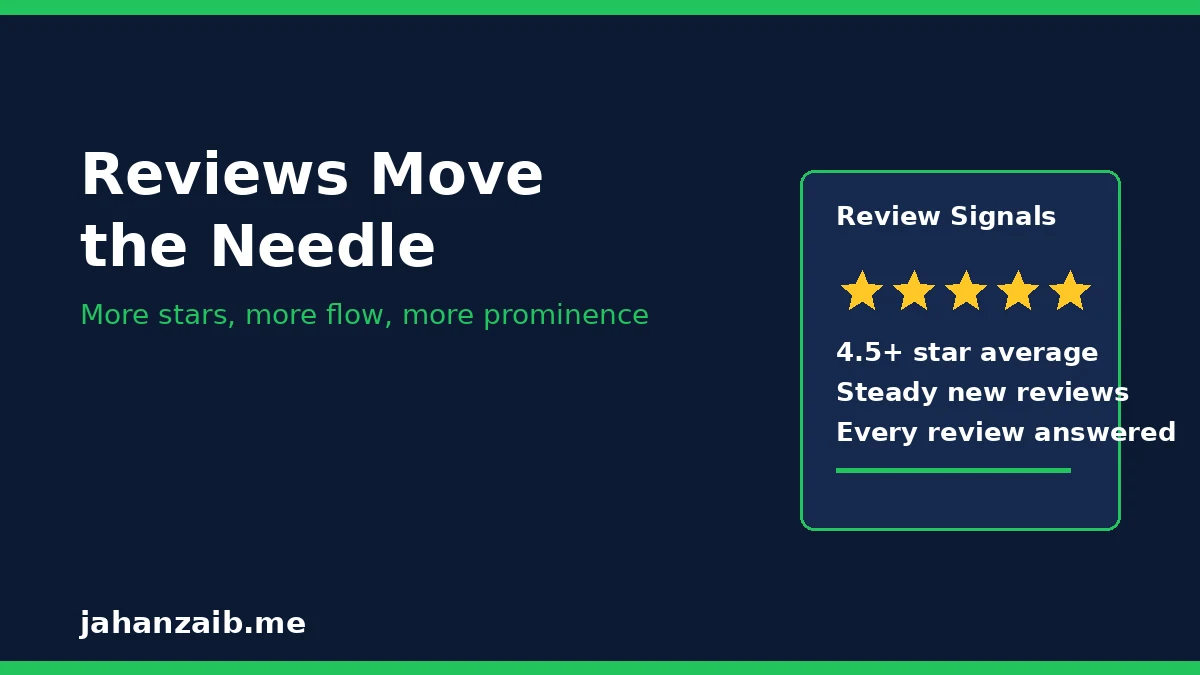
Make reviews part of your daily routine: ask at the till, in the invoice email, and on the receipt.
What Mistakes Push You Out of the Map Pack?
These are the errors I see most often, and each one costs real visibility:
- Stuffing keywords into the business name, like “Plumber Best Cheap Plumbing 24/7”. This can get your profile suspended.
- Using a fake address or a virtual office to appear in a city you are not in.
- Letting your hours go stale, especially around holidays.
- Ignoring negative reviews instead of replying professionally.
- Claiming a service area far wider than you actually serve.
- Running two profiles for one location, which splits your reviews and confuses Google.
How Long Does It Take to Rank in the Map Pack?
Most businesses see movement within 4 to 8 weeks of consistent work, and reviews and profile changes update faster than website changes. Competitive categories in big cities take longer. The honest answer: the businesses that stay in the Map Pack are the ones that keep the routine going month after month, not the ones that sprint for two weeks and stop.
What Should You Re-Check Each Month to Hold Your Map Pack Position?
Map Pack rankings are not permanent. Google re-scores relevance and prominence all the time, so a monthly check keeps you in the top three instead of slipping out quietly. Here is the five-minute routine I recommend:
- Search your main service keyword from two or three spots across your city, because the Map Pack changes block by block.
- Confirm your review flow is still steady: new reviews every week, not a burst followed by silence.
- Scan your profile hours, photos, and services for anything stale, especially around holidays.
- Reply to any reviews you missed, positive or negative, within 48 hours.
- Check that your business name, address, and phone number still match everywhere online.
Updated 29 October 2026.
Should You Hire a Local SEO Expert for Map Pack Rankings?
If you have the time, the plan above will move you forward. But if you would rather have a specialist handle it, that is exactly what I do. I am a local SEO and digital marketing specialist with six years of SEMrush experience, and I help local businesses in the UK, US, Australia, and other Tier-1 markets get found on Google Maps and Search. Tell me about your business on my contact page and I will give you an honest assessment of where your Map Pack rankings stand today.
For background on how Google’s local results connect to its mapping products, see Google Maps on Wikipedia.